
Sometimes, Lord, I look back at all the ways You’ve provided for me in the past, and I am brought to tears. As Paul and I continue to juggle life in two countries, I think back to a day over ten years ago when we became citizens of our adopted country of France. What a valuable lesson you taught me that day…
We walked from Metro Bellecour through Rue de la Republique on this morning in January—the sun shining, the weather so mild. We crossed the Rhone at the Pont Wilson and took a left down the wide street, crossing into the block that is taken up by the stately Prefecture Building. We were walking quickly, afraid to miss our 10 a.m. appointment. The guard, young and polite, directed us to the front of the imposing building, up the winding stone staircase, into the ‘great hall’ with its cornices and high ceilings and there, we stopped and waiting in front of Salle Jean Moulin. Dozens of other people were waiting in front of the closed doors.
We were all waiting to become French.
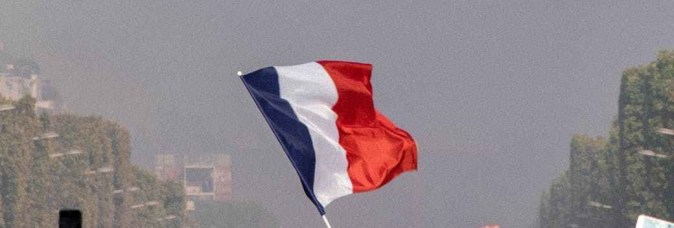
Photo by Nicolas on Pexels.com
After over three years of paperwork and waiting, we had been convoqués (summoned) to receive our French naturalization papers. I whispered to Paul, “Take it all in, so I can describe it later.”
I did not feel particularly sentimental or excited about this step. After all, we began the process for Andrew. He was trying out for the French national baseball team and needed to be French to join, and we were told that if the whole family was French, the process might go more quickly for him.
It didn’t. The day of his 18th birthday came and went without him being French. We however, received notice of our acceptance later that year.
So really, I didn’t care much about becoming French. I wanted it for my son, for his future. But Paul and I agreed that with political situations so volatile throughout the world, and visas harder to come by in France, perhaps it would be a good idea.
I was never the student who dreamed above all else of going to France. I was not the girl who soaked up the culture like a fish in water. I was enchanted, but also intimidated, feeling I didn’t have the personality to embrace France—too sensitive and sentimental. But I came, out of a call, an obedience, a scary step into the unknown.
And I stayed. We stayed. Twenty years in the country was enough, I suppose, to merit being French. No matter that I still didn’t always ‘feel’ French or sound French. I had grown to love the people, one by one, and the country, visit by visit into its untamed countryside and historic villages.
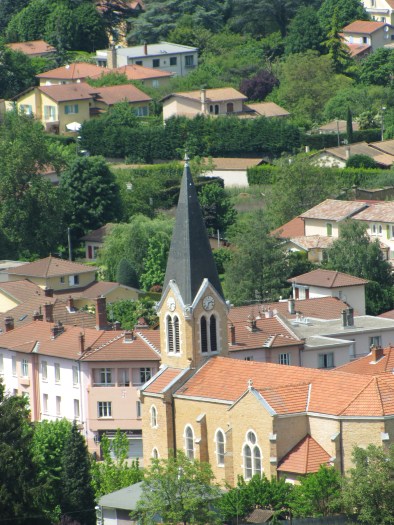
Anyway, here we were at the Prefecture with a group of other people, all waiting to become French. We looked around. We were one of the rare white couples. Most of the people looked North African or African or perhaps Middle Eastern or Eastern European.
Immediately I realized that this ceremony meant a lot more to most of these people than it did to me. It was their hope, their future, their security. I wondered briefly if we would see anyone we knew, and before that thought had time to disappear, in walked Cynthia, the young mother from Central African Republic who goes to our church. Two years, she’d been waiting.
Eventually, a little after 10, we were ushered into a beautiful grande salle with a grand oil painting of a scantily clothed man chasing a scantily clothed woman. Greek mythology? There were about 100 red velvet covered folding chairs set up in the room, and two women greeted us and instructed us to have a seat.
Paul recognized one of the women as someone he had met with during this three-year- process. The ladies were friendly, professional and actually made the event seem joyous. A celebration. They explained the importance of the papers we would be receiving in our dossier. The one that mattered, the one that said we were French, was indeed unique, one of a kind, never to be reissued. “Guard it with your life, make photocopies and keep it in a safe, safe place,” she said. In case of fire, she told us what to do, who to write to.
She then explained that she would call our names, and we would come up one at a time, or by couple, and sign a paper, hand over our carte de résident and receive the dossier with our French naturalization paper, our certificate of birth and of marriage, our livret de famille, a copy of the French national anthem, “La Marseillaise”, and a few other things.

A young man volunteered to read the letter of welcome from the President of the Republic. Then the woman reminded us of the cost of this citizenship, the cost of liberté, égalité, fraternité, the many other foreigners throughout the centuries who had been ‘naturalized’, become French and some, become great men and women of France.
And as she spoke, something happened inside me. I felt a stirring, a pride, a thankfulness, and even a tear or two in my eyes. We’d given a good part of our lives to this country—not in a grand way. In a soft and subtle and even desperate way, but we’d done it with faith, and I felt proud, in a strange way, to be French. I felt hopeful and happy.
I especially felt the joy of these other people, most needing, probably desperately, this nationality. For us it was un plus, just a bonus, but for many of the others, it was essentiel.
And so, that day I became French. Yet I remained an American.

Photo by Sawyer Sutton on Pexels.com
And yet, deep down inside, I am neither. I am a wayfaring stranger, a citizen of heaven, waiting, at times impatiently, for my Savior to call out to me and say, “Welcome home to eternity.”
Until that day, I pray I, we, will serve Him with honor and dignity and integrity in whatever land He calls us to for however long He asks us to stay.
ELIZABETH MUSSER writes ‘entertainment with a soul’ from her writing chalet—tool shed—outside Lyon, France. Find more about Elizabeth’s novels at www.elizabethmusser.com and on Facebook, Instagram, Twitter, and her blog.

 Elizabeth Musser
Beautiful post. It brings back so many memories. Thank you for sharing.
LikeLiked by 1 person